
Technical Manufacturing Guide |
Author: Justin (Factory Manager) |
Focus: Print Quality, Durability & ROI |
Updated: Jan 2026
The Definitive Guide to Umbrella Printing Techniques (2026 Edition)
Choosing the wrong printing method is one of the fastest ways to trigger delays, rework, or disappointed stakeholders.
A technique that’s perfect for a bold 1-color logo can fail badly on a gradient, a photo, or a complex multi-panel layout.
At HFBROLLY, we simplify the decision using four buyer-relevant factors:
artwork type, MOQ economics, durability (color fastness), and fabric compatibility.
This guide covers the three most common technologies used in corporate and retail umbrella programs.
Quick Decision Matrix: Which Method Should You Choose?
- Simple logos (1–2 spot colors) & best unit cost at scale: choose Screen Printing.
- Photos, gradients, full canopy patterns, unlimited colors: choose Dye Sublimation (Digital Transfer) BEST QUALITY.
- Small batches, fast turnaround, mixed SKUs (and some darker fabrics): consider UV Digital Printing FAST.
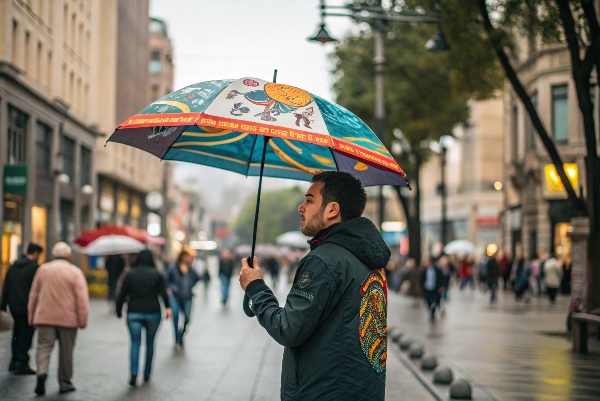
Decision Summary: Pick the Right Printing Method in 60 Seconds
Step 1Look at your artwork:
- Flat logo / text → Screen Printing
- Gradient / photo / watercolor / complex pattern → Dye Sublimation
- Small batch + fast delivery (or multiple names/designs) → Digital (Sublimation or UV depending on fabric + effect)
Step 2Check your MOQ economics:
- High volume (hundreds to thousands) → Screen printing can win on unit cost.
- Low volume (dozens to a few hundred) → Digital avoids screen setup cost.
Step 3Define durability needs (how “hard” the umbrella will be used):
- Outdoor events, daily commuting, strong sun exposure → prioritize high color fastness and abrasion resistance.
- Premium gifting → prioritize “no hand-feel”, clean gradients, and high-end visual finish.
Step 4Confirm fabric + base color:
- Screen printing can perform well on both light and dark fabrics (solid logos).
- Dye sublimation is strongest on light base fabrics for maximum vibrancy.
- UV digital can be useful for quick programs, but you should validate flexibility and rub resistance for canopy use.
1) Silk Screen Printing: The Industry Workhorse
Screen printing pushes ink through a mesh screen onto the canopy fabric. It’s the classic choice for bold, clean logos and slogans.
For corporate programs with consistent branding and large quantities, this method remains highly competitive.
- Pros: excellent opacity for solid colors; precise spot-color control (Pantone-style matching); low unit cost on bulk orders.
- Cons: not suitable for gradients/photos; multi-color designs require multiple screens (setup cost increases quickly).
- Best for: corporate logos, text-based slogans, simple icons on one or two panels.
2) Digital Dye Sublimation: The 2026 Standard for Full Color
Dye sublimation prints the artwork onto transfer paper, then uses heat to turn ink into gas and bond it into polyester fibers.
This is why it delivers photo-realistic detail and zero “hand feel”—the print becomes part of the fabric.
- Pros: BEST QUALITY unlimited colors (CMYK), gradients, photo detail, edge-to-edge coverage, no cracking/peeling.
- Cons: most vibrant results are on light base fabrics; very strict brands may require color approval via swatches/sample.
- Best for: museum art umbrellas, fashion brands, full canopy patterns, sponsor/event storytelling designs.
3) UV Digital Printing: Fast Customization for Certain Use Cases
UV printing uses UV-curable inks that harden instantly under UV light. It can be a practical option for fast programs,
small batches, or special surfaces. On umbrella canopies, the key is validating flexibility and rub resistance for real-world use.
- Pros: fast turnaround; helpful for small batches and multiple SKUs; can work for certain quick projects and effects.
- Cons: durability depends on application and substrate; for canopy use, always confirm rub/peel resistance and fold-crease performance.
- Best for: rapid campaigns, low-quantity custom runs, selected designs where testing confirms performance.

4) Comparison: Cost vs Quality vs Durability
Use this table to match your design requirements with the right technology.
| Feature | Screen Printing | Dye Sublimation (Digital) | UV Digital Printing |
|---|---|---|---|
| Best for | Simple logos (1–2 spot colors) | Photos, gradients, full patterns | Fast small batches / special effects (validate durability) |
| Color capability | Spot colors (typically 1–4) | Unlimited (CMYK) | Full color possible (depends on substrate + testing) |
| Detail & gradients | Medium (no smooth gradients) | High (photo quality) | Medium to high (case-dependent) |
| MOQ economics | Best at high volume (setup screens) | Strong at low-to-mid volume | Often used for small-to-mid fast programs |
| Durability feel | Good (surface ink) | Permanent bond (fused to fiber), soft | Depends on application; confirm rub + fold tests |
| Pantone matching | Excellent for spot colors | Achievable but confirm via swatches/sample | Case-dependent; confirm via sample |
5) Fabric Matters: Pongee vs Polyester
Printing quality is only as good as the fabric. Some suppliers use low-grade polyester that feels plastic-like and can mute detail.
For premium programs, we often recommend high-density pongee for a cleaner surface and better perceived quality.
“Think of high-density pongee as ‘high-definition paper’. A tighter weave can improve sharpness and black depth, especially on detailed digital artwork.
Great printing on a poor fabric still looks cheap—so we start with the canopy spec first.”
6) Quality Control: What Tests Actually Protect Your Brand?
Buyers often ask, “Will the logo peel or fade?” The answer depends on both printing method and process control.
For production batches, we focus on practical checks tied to real usage.
Practical QC Checklist for Printed Umbrellas
- Rub resistance: dry & wet rub checks help reduce “logo scuffing” complaints.
- Adhesion check (where relevant): tape-style checks can flag weak bonding on surface-ink processes.
- Color consistency: compare to approved swatches/sample under consistent lighting.
- Panel alignment: for full canopy designs, seam-to-seam continuity is critical (a 2–3mm drift can ruin the look).
Tip: If your design includes gradients across panels, request a pre-production confirmation sample or fabric swatches before bulk.
Not Sure Which Method Fits Your Design?
Send your artwork (.AI / .PDF preferred). Our team will review it and recommend the most cost-effective printing method for your target quality level.
(Fast reply with recommended method + production notes)
FAQ: Umbrella Printing Methods
Which printing method is best for a simple 1–2 color corporate logo?
Screen printing is usually the best choice for simple logos, especially at higher quantities, because setup cost is spread across the batch and spot colors can be very clean.
Which method is best for photos, gradients, and full canopy artwork?
Dye sublimation (digital transfer) is the strongest option for photo realism, gradients, and edge-to-edge patterns with a soft “no hand-feel” finish.
Can you print on dark fabric with dye sublimation?
Dye sublimation is most vibrant on light bases. For strict dark-base branding, we typically recommend discussing alternative constructions or confirming results via swatches/sample.
What’s the main cost driver: screens or ink?
For screen printing, setup (screens per color) is a major cost driver. For digital printing, the main cost drivers are artwork complexity, print coverage, and production workflow (especially multi-panel alignment).
How do I know the print won’t peel or scuff?
Use rub resistance checks (dry & wet) and adhesion-style checks when relevant. Also confirm fold/crease performance if the umbrella will be frequently compacted.
Can you match Pantone colors?
Pantone references are welcome. Screen printing with spot colors is typically best for strict Pantone programs. For digital printing, confirm via swatches or a sample for high-stakes brand colors.
What file format should I send?
Vector files are best for logos (AI/PDF/EPS). For photos or complex art, provide high-resolution files at intended print size (avoid low-res web images).
What’s the best method for small quantities or multiple designs?
Digital printing is often the best fit because it avoids screen setup fees and supports multi-design programs more efficiently.
Do different fabrics change the print result?
Yes. Higher-density fabrics can improve perceived sharpness and color depth. Fabric choice is a core part of premium print outcomes, not an afterthought.
What information do you need to recommend the right method?
Send your artwork, target quantity, umbrella model (or use case), canopy color preference, and your quality expectation (basic promo vs premium gifting vs retail).