
Custom tassel beach umbrellas combine shade, branding and a distinctive resort-style appearance. However, buyers should look beyond the fringe. Canopy size, pole construction, fabric performance, anchoring, printing and packing all affect whether the finished umbrella suits a beach, hotel, poolside, retail or event programme.
What is a tassel beach umbrella?
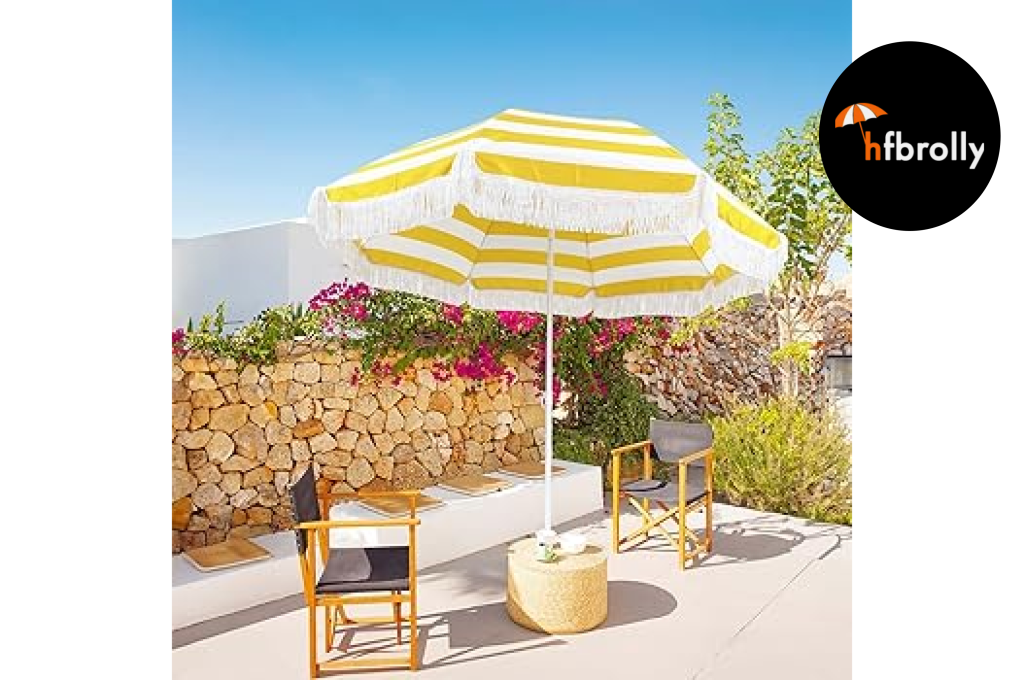
A tassel beach umbrella is an outdoor shade umbrella finished with tassels, fringe, scalloped valances or similar decorative trim around the canopy edge. The look is popular with resorts, beach clubs, lifestyle brands, cafés, retailers, weddings and outdoor campaigns.
The trim changes the appearance, but it does not define the performance. A decorative umbrella still needs a suitable frame, fabric, pole and anchoring system. Portable consumer-style models and larger commercial umbrellas may look similar in photographs while having very different weights, components and installation requirements.
Start with the intended use
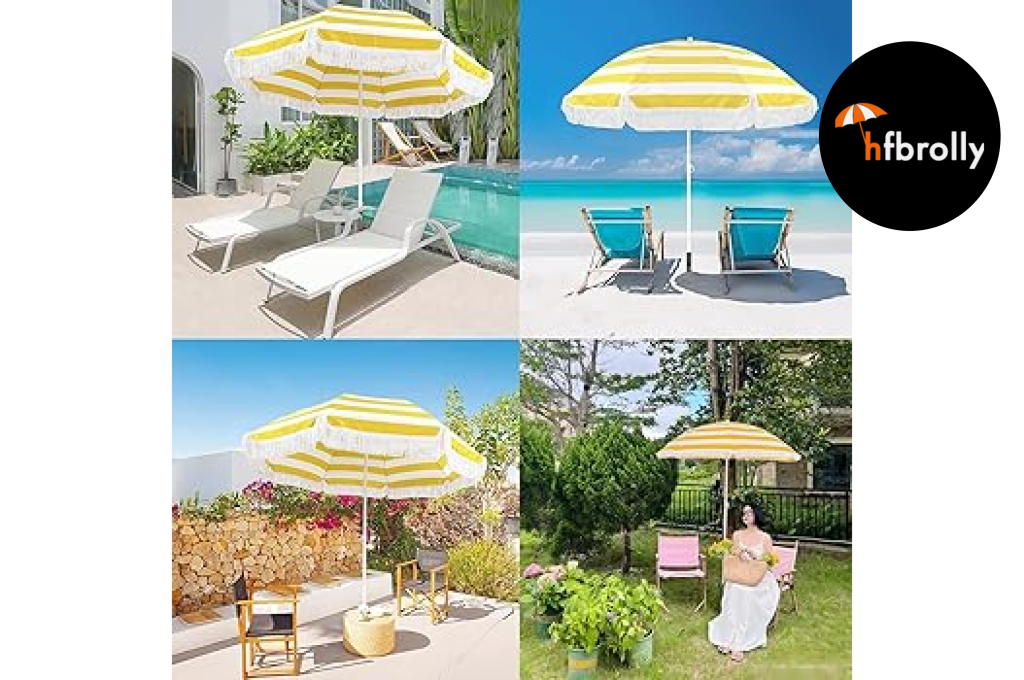
Resorts, hotels and beach clubs
Hospitality projects usually need a consistent visual identity across multiple units. Colour matching, replacement canopies, cleaning, storage and daily staff operation matter as much as the first installation. Buyers should confirm whether umbrellas will remain in a fixed position or be moved every day.
Retail and lifestyle brands
Retail programmes often prioritise design, packaging and customer-friendly assembly. Carton dimensions and product weight can materially affect shipping costs, especially when each umbrella is sold individually.
Events and promotional campaigns
Temporary projects require fast setup, transportable components and visible branding. A lighter umbrella may be practical for logistics, but it still needs a safe base or anchor and a clear operating policy for changing weather.
Beach and picnic use
Portable beach umbrellas need manageable packed length and weight. A sand anchor or pointed lower pole may suit certain locations, but no anchor works equally well in every type of sand, soil or wind exposure.
Choosing the canopy size and shape
Common shapes include round, hexagonal, octagonal and square canopies. The correct size depends on the number of users, furniture footprint, sun angle, walking clearance and available storage space.
- Smaller portable models: easier to carry and pack, with a more limited shade area.
- Medium beach umbrellas: balance shade, transport and visual impact for many lifestyle programmes.
- Large hospitality parasols: provide more coverage but increase wind load, pole strength and base requirements.
Do not approve a model from canopy diameter alone. Ask for the open diameter, arc measurement where relevant, total height, closed length, pole diameter, packed size and unit weight.
Pole and frame options
- Wood: offers a warm, premium appearance. The wood species, finish, joints and storage conditions influence service life.
- Aluminium: relatively lightweight and corrosion resistant when correctly specified and finished.
- Steel: can provide a robust, cost-effective structure, but coating quality and corrosion protection are important.
- Fibreglass components: may add flexibility in selected designs, although the complete frame must still be evaluated as a system.
A “metal frame” description is too vague for commercial sourcing. Request the actual pole material, dimensions, wall thickness where relevant, rib construction, opening mechanism and surface finish.
Fabric, UV and water-resistance requirements
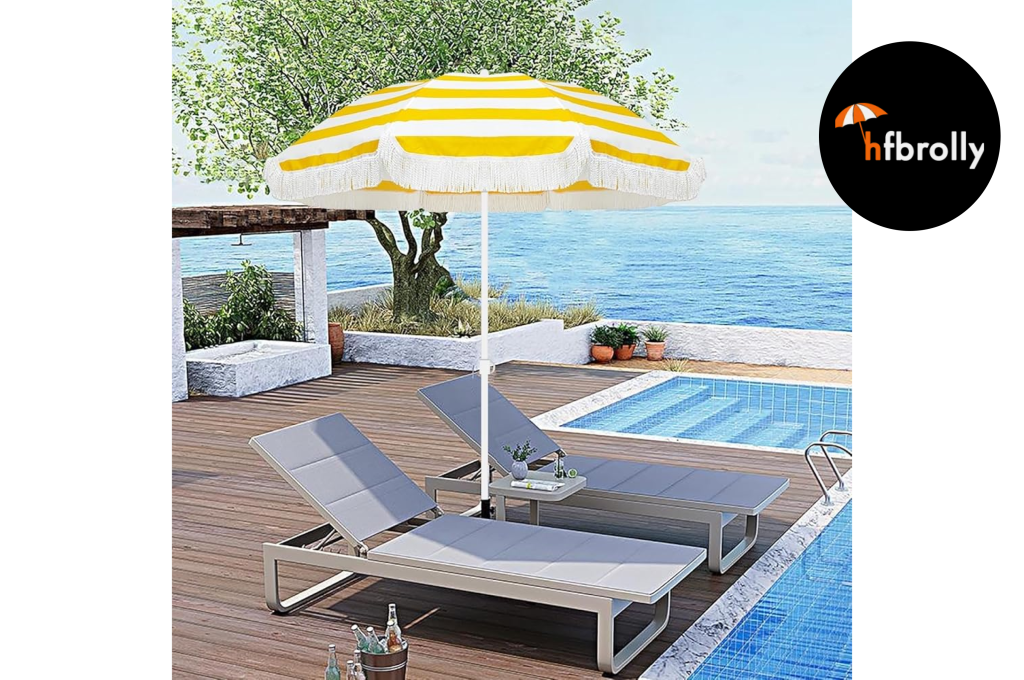
Polyester is widely used because it supports colour and printing well. Other fabric constructions may be suitable for projects that prioritise colourfastness, recycled content or a specific hand feel.
Terms such as “UV resistant,” “UPF 50+,” “waterproof” and “fade resistant” should be tied to a defined material and test requirement. A coating or dark colour alone does not prove a performance level. If UPF, colourfastness, water resistance or restricted substances matter, state the required test method and acceptance level before production.
Beach umbrellas are primarily shade products. Seams, vents and decorative trim can allow water penetration, and the umbrella should not be presented as a permanent weather shelter unless the complete design has been specified and tested for that purpose.
Tassels, fringe and decorative construction
Decorative trim needs its own specification. Confirm:
- Tassel or fringe material and colour
- Finished length and spacing
- Attachment method and seam construction
- Colourfastness requirements
- How the trim will be protected during packing
- Cleaning and storage instructions
Longer tassels create stronger visual movement but can tangle more easily in packing and wind. A physical sample is useful for judging scale, drape and colour against the canopy.
Custom logo and artwork options
HFBrolly can review logos on canopy panels, valances, straps, covers, labels and packaging. The best printing method depends on the artwork, fabric, quantity and required finish.
- Screen printing: suitable for many spot-colour logos and repeat programmes.
- Digital printing: useful for detailed graphics, gradients and large printed areas.
- Colour-matched fabric: appropriate when the base canopy colour is central to the brand identity.
- Custom labels and packaging: useful when the product will be sold or supplied as a branded set.
Supply editable AI, CDR or PDF artwork where possible. Include Pantone references, logo dimensions and placement instructions. A digital mock-up confirms layout, while a physical sample is needed to judge the real colour, print scale, trim and construction.
Wind safety, bases and anchors
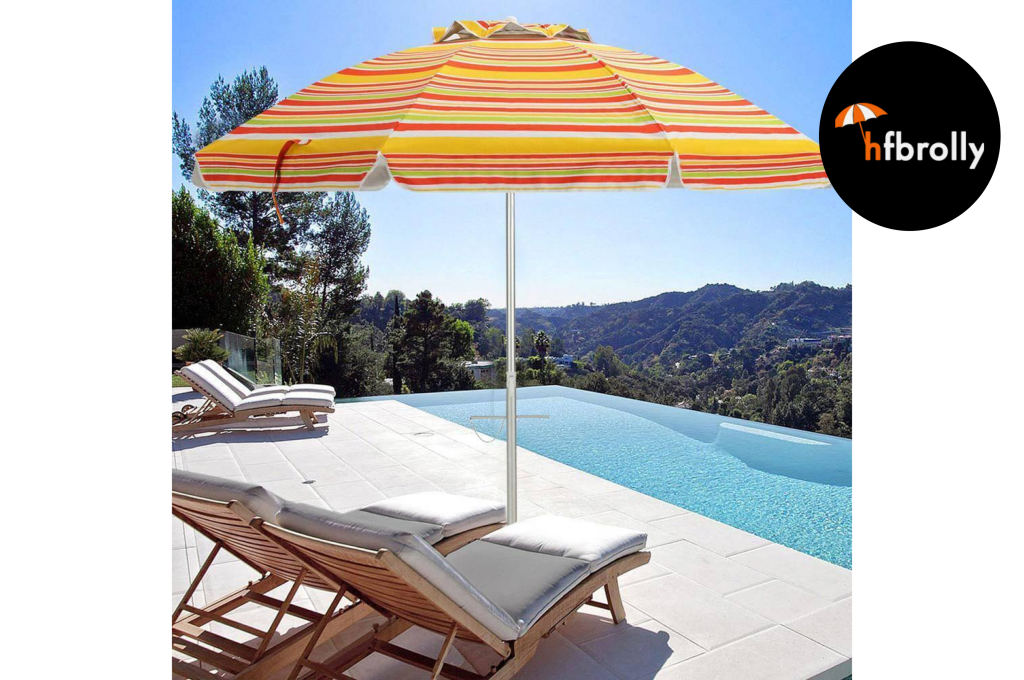
Wind acts on an open umbrella like a sail. Canopy area, venting, pole stiffness, rib construction, base weight, anchor design and site exposure all influence stability. No decorative beach umbrella should be marketed as universally “windproof.”
Use a base or anchor approved for the selected model and installation. Close umbrellas during strong winds, storms or when the location is unattended. Commercial operators should create clear opening, closing and storage procedures for staff.
Sampling and quality checks
HFBrolly’s normal sampling time is 3–5 days after artwork and specifications are confirmed for suitable styles. Large parasols, custom components or special materials can require longer.
A useful sample review should cover:
- Open dimensions, height, packed length and weight
- Pole, ribs, opening mechanism and component fit
- Fabric colour, print scale and logo position
- Tassel length, spacing, attachment and drape
- Base or anchor compatibility
- Cover, labels, individual packing and carton requirements
For bulk production, agree the inspection points and any AQL or laboratory testing requirements before manufacture.
MOQ, packaging and worldwide delivery
HFBrolly has more than 30 years of umbrella manufacturing experience. The MOQ starts from 50 pieces on selected styles. Larger commercial structures, special fabric, custom colour production and certain printing methods may require higher quantities.
Packaging should protect the tassels, canopy finish, pole and fittings without creating unnecessary volume. Confirm whether the order needs a carry bag, retail carton, master carton markings, barcode, instruction sheet or replacement components.
Worldwide delivery is available. Courier, air and sea options depend on the packed dimensions, quantity, destination and required date. Beach umbrellas are bulky, so packaging data should be included when comparing landed costs.
Care and storage
- Allow the canopy and trim to dry completely before long-term storage.
- Remove sand, salt and surface dirt according to the fabric care instructions.
- Do not force the opening mechanism if tassels or fabric are trapped.
- Store the umbrella closed, covered and away from sustained moisture.
- Inspect the pole, ribs, joints, trim and anchor before reuse.
Information to send for a quotation
- Application: beach, resort, poolside, event, retail or promotional use
- Required canopy diameter, shape and quantity
- Preferred pole and frame material
- Fabric colour and performance requirements
- Tassel style, colour and length
- Logo file, print positions and Pantone references
- Base, sand anchor or mounting requirement
- Packaging and testing requirements
- Delivery city, country, postcode and required date
For larger outdoor structures, also read our commercial parasol buyer’s guide.
Planning a custom tassel beach umbrella project? Contact HFBrolly with your brief. We will review the construction, branding, quantity and logistics before recommending a suitable production route.